E-Waste recycling 101- What It Is and How to Recycle Responsibly
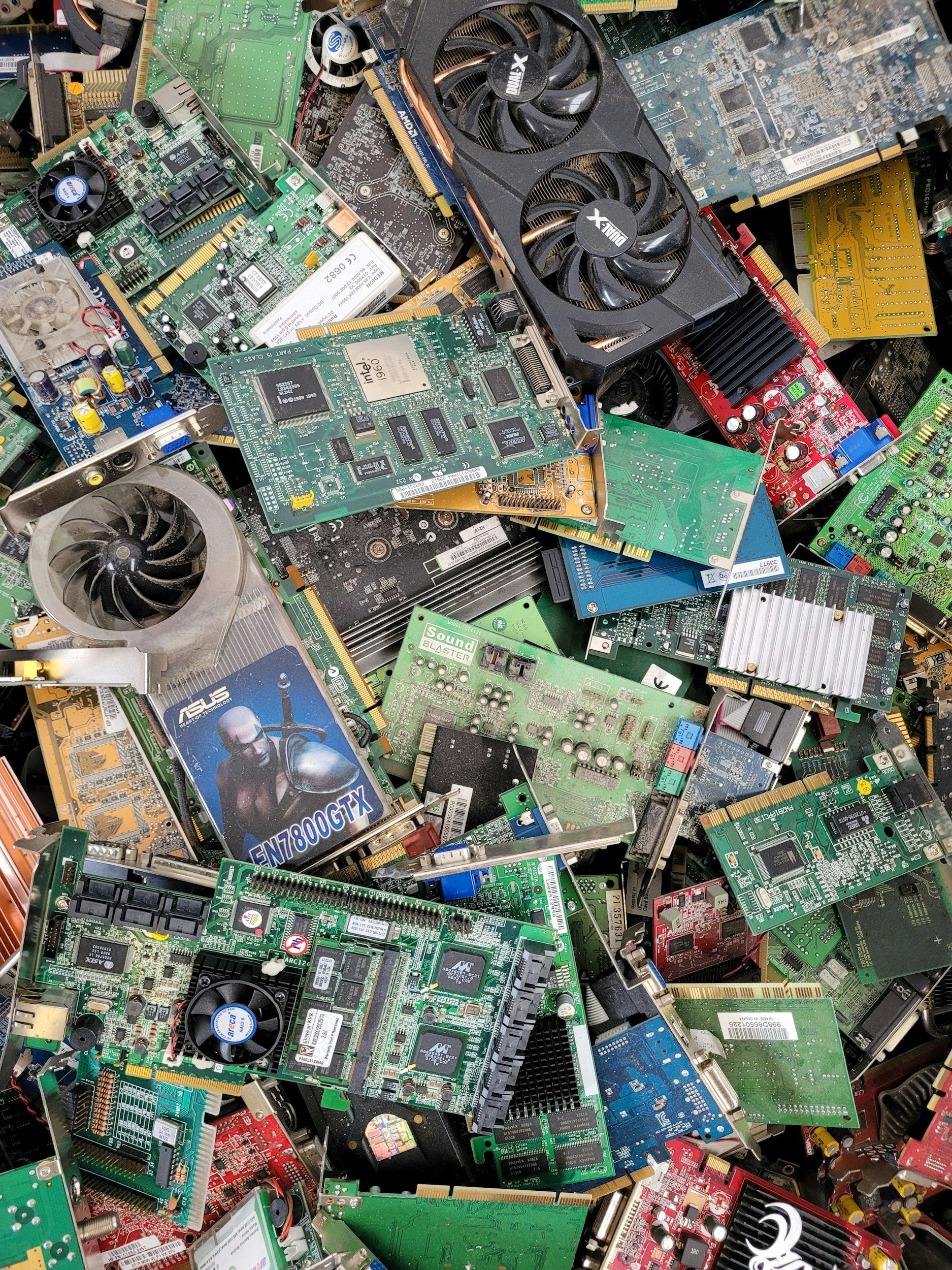
E-Waste pile of electronic parts and components
What Is E-Waste?
E-waste, or electronic waste, refers to discarded electronic devices and equipment that are no longer usable, needed, or supported. As technology advances and equipment lifecycles shorten, e-waste has become one of the fastest-growing waste streams in the United States.
Common examples of e-waste include:
computers, laptops, and monitors
servers and networking equipment
printers, copiers, and office electronics
televisions and displays
cell phones and tablets
cables, peripherals, and accessories
For businesses and organizations, e-waste often accumulates during office upgrades, data center refreshes, relocations, or equipment replacements. Planning ahead with a reliable electronics recycling provider helps prevent last-minute disposal issues.
Why E-Waste Can’t Go in the Trash
Electronic devices contain a mix of valuable materials and potentially hazardous components. Improper disposal can lead to environmental harm, regulatory risk, and unnecessary landfill waste.
Many jurisdictions restrict electronics from regular trash disposal, making responsible e-waste recycling services essential for compliance and sustainability.
What Happens During E-Waste Recycling?
Responsible e-waste recycling typically includes:
secure collection and transportation
sorting and evaluation of equipment
proper handling of data-bearing devices
dismantling and material separation
recovery of metals, plastics, and components
Organizations retiring IT equipment should also consider secure data destruction services to ensure sensitive information is handled responsibly during recycling.
How to Recycle E-Waste Responsibly
Best practices for businesses and facilities include:
inventorying electronics before disposal
separating e-waste from general waste streams
working with a certified electronics recycler
documenting recycling activity for audits and sustainability reporting
coordinating pickups during office moves or system upgrades
Following these steps helps reduce risk while supporting environmental goals.
Who Should Recycle E-Waste?
E-waste recycling is important for:
commercial offices and corporate facilities
manufacturing and industrial operations
healthcare organizations
schools and universities
government agencies
Any organization using electronics will eventually require a scalable electronics recycling solution.
Environmental Benefits of E-Waste Recycling
Recycling electronics responsibly helps:
reduce landfill waste
conserve natural resources
recover reusable materials
support corporate sustainability initiatives
It also complements broader programs such as appliance recycling, battery recycling, and lighting recycling by keeping regulated materials out of the waste stream.
Total Reclaim’s Approach to E-Waste Recycling
Total Reclaim provides electronics recycling services for businesses and municipalities, with a focus on responsible handling, material recovery, and compliance-ready processes.
By integrating electronics recycling with other recovery services, Total Reclaim helps organizations simplify waste management while reducing environmental impact.
Frequently Asked Questions (FAQ)
What qualifies as e-waste?
Any electronic device with a plug, battery, or circuit board—such as computers, phones, printers, or servers—is considered e-waste.
Can e-waste go in a dumpster?
No. Electronics should not be placed in dumpsters or regular trash due to environmental and regulatory concerns.
Do businesses need to document e-waste recycling?
Yes, in many cases. Documentation supports compliance, internal audits, and sustainability reporting.
Is e-waste recycling required by law?
Requirements vary by state and local jurisdiction, but many areas restrict electronics from landfill disposal.
What should I do before recycling electronics?
Inventory devices, identify data-bearing equipment, and coordinate with a professional electronics recycling provider.
